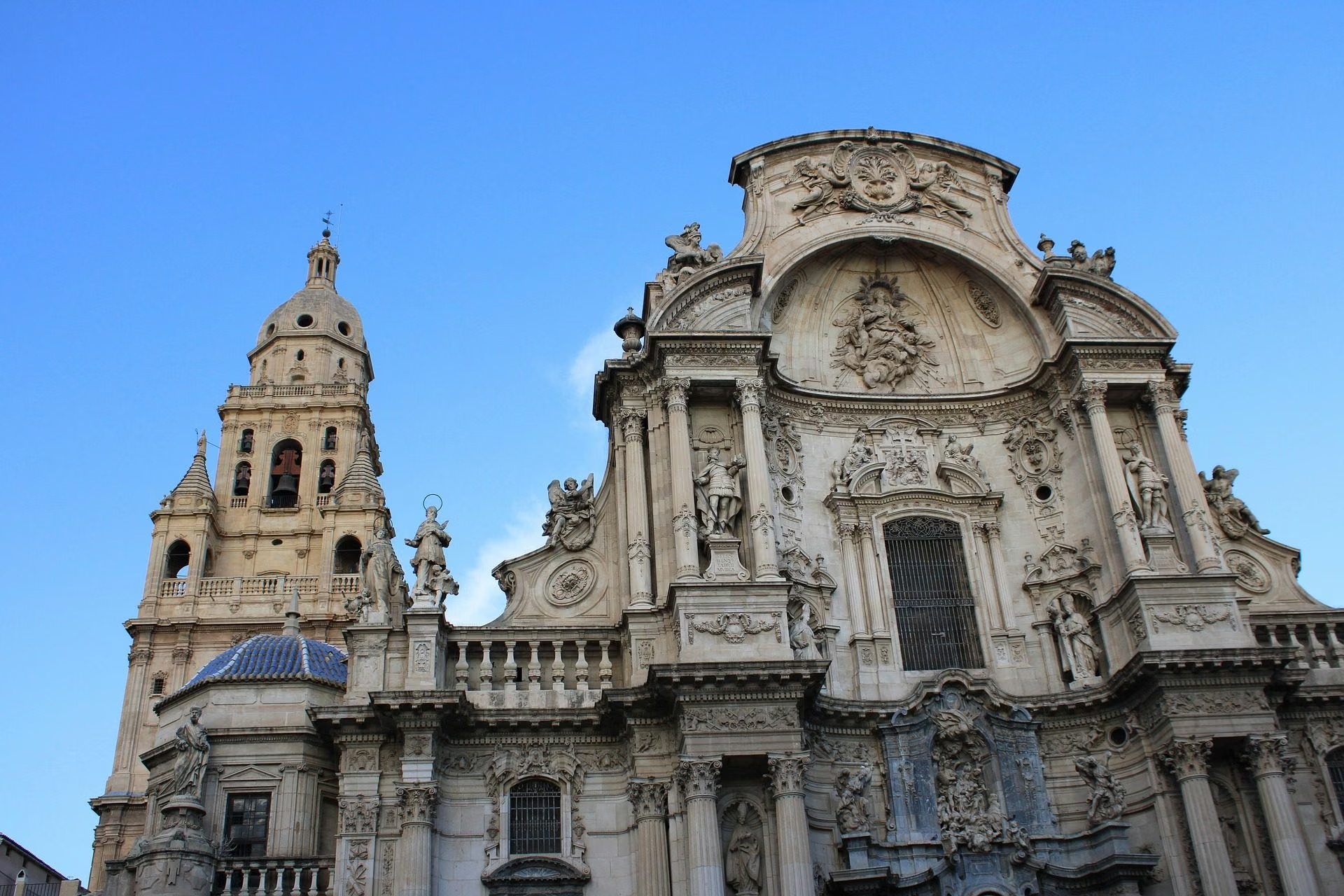
Murcia city
A capital on a human scale: huerta, baroque cathedral and street life all year round.
Living in Murcia city
Murcia is a capital of about 470,000 inhabitants, with its huerta, baroque cathedral, universities and street life all year round, 45 minutes from the beach and about 2 h 40 min from Madrid by AVE.
It is the choice for those who want to live in a real city, not a development, and spend the summer on the coast. Murcia is lived on foot and from terrace to terrace: tapas at midday, the huerta at the city's doorstep and the beach at hand when the heat bites.
Areas within Murcia city
Each has its own character, its own prices and its own kind of buyer. If one of them interests you, ask us about it.
Historic centre
You step outside and you are in Plaza de las Flores, the Cathedral in the background and a beer with a tapa on a terrace. Murcia is lived on foot, with neighbours in the street and its own cultural calendar.
San Miguel and Santa Catalina
You step out of the entrance and have everything: bakery, shops and transport, with characterful buildings around. The comfort of not needing a car. Among the priciest areas (≈ €3,200–3,400/m²).
Barrio del Carmen
A district that looks onto the stations: you leave home and within minutes you are on a train, with new build, modern windows and people coming and going. Made for those who travel and work.
Juan Carlos I and Juan de Borbón
Wide avenues, more recent buildings with garages and green areas where children play. Comfort and space without losing the city (≈ €2,800–3,100/m²).
Segura river and Malecón
The river sets the pace: walks at sunset, people running and gardens like the Malecón, where the city breathes. Living near water deep inland.
Huerta villages
Houses with gardens, orange trees beyond and a slower pace ten minutes from the centre. More space, more air and neighbours who know each other. Espinardo, Cabezo de Torres, Churra or El Palmar. Within the same half-hour radius are Molina de Segura, Alcantarilla, Santomera, Beniel, Las Torres de Cotillas, Archena and Librilla.
Altorreal and La Alcayna
You step into the garden with your coffee, the children cycle on streets with no traffic and the golf course is five minutes away. Life on a residential estate, with Murcia a quarter of an hour away by motorway.
La Alberca and the hills
You open the window and there are pine trees. You walk in the hills before breakfast, eat in the village and sleep better in summer than in the centre. All ten minutes from Gran Vía.
Why people fall in love with Murcia
A city to be lived on foot.
The centre is flat and compact, with squares, terraces, shops and neighbourhood life. You can live without a car between the Barrio del Carmen, San Miguel and Santa Catalina.
Real huerta food.
Zarangollo, marinera, pastel de carne, paparajotes… Murcia was Spanish Capital of Gastronomy in 2021 and the huerta is still alive ten minutes from the centre.
Festivals with identity.
Holy Week, with its processions and Salzillo's sculptures, the Bando de la Huerta and the Burial of the Sardine give the city a calendar of its own. Strolling at sunset past the Cathedral and Santa Catalina square, with the scent of orange blossom in spring, is Murcia in its purest form.
What people ask us most about Murcia city
Where is Murcia city?
In the interior of the Region of Murcia, about 45 minutes from the coast. Región de Murcia airport (Corvera) is about 25–30 minutes away and Alicante about an hour.
Why choose Murcia city?
Because it offers the full services of a capital, universities, shops, healthcare and schools at friendlier prices than many capitals, and the coast less than an hour away. We recommend it to those who prefer a city with life all year round to a seasonal development.
What types of property are there?
Flats in the centre and established neighbourhoods, penthouses, homes in listed buildings in the old town and detached houses on the outskirts and in the outlying districts. There are also luxury villas in developments with golf courses, such as Altorreal and La Alcayna, and homes in suburban developments, such as the La Ñora area, next to Los Jerónimos and alongside UCAM University, with one of the best international atmospheres in Murcia right now. And there are new builds too.
How much does it cost to buy a property here?
Murcia has a home for every way of living the city: from very accessible flats in neighbourhoods with street life to singular homes in the old town, steps from the Cathedral. Tell us how you imagine your day-to-day and we will show you what suits you.
Is it a good area to invest in?
Murcia is a city with a very strong and powerful industrial and business base, which keeps growing and is also attracting a great deal of foreign investment. The city is constantly growing: demand, population and prices keep rising. On top of this comes rental demand sustained by the universities and the services of a capital, and many clients who buy to enjoy the city leave their home with us to manage when they are away.
What lifestyle can you expect?
Street life, terraces, huerta, food and culture, with the beach at hand in summer. A typical day: coffee in a square, a stroll through the old town, tapas at midday, an afternoon in the huerta or shopping and dinner on a terrace.
What is life like in winter?
Winters are mild and bright, and the city keeps its life all year round: sunny terraces, tapas and strolls through the old town. In January the average temperature is around 10–11 °C, with highs of about 16–17 °C. The summers, full of sun, are enjoyed at the pool, in the huerta and an hour from the beach.
Is it suitable for families moving to Spain?
Yes. Murcia has the region's widest choice of international schools, such as El Limonar International School, with international awards for its teaching staff and CIS accreditation, and the most complete public and private healthcare. Schools and healthcare below.
What makes its old town special?
Living in the old town means living among façades with centuries of history, steps from the Cathedral, the squares and the terraces of always. A neighbourhood with character, of the kind that can't be copied.
Is it a good place to live long term?
For those seeking a real city, with services, good food and still-moderate prices, yes. It is a city in which you live well at any age.
First purchase in Spain? We answer the NIE, the regional purchase taxes and getting a mortgage as a non-resident.
Where to eat in Murcia city
The places we recommend by name: where we have breakfast, where we have lunch and where we end the day. A personal selection by CALA, not a directory.
Murcia and its huerta
Healthcare and hospitals
Murcia has the region's main hospitals, public and private.
In Murcia city
The region's main hospital.
Public hospital in the city.
Private hospital in the city.
Private hospital in the city.
Private hospital in the city.
Private, bilingual and international schools
Murcia has the region's widest choice of international schools.
In Murcia city
Cognita Group. English national curriculum with IGCSE and A-Levels, and Spanish qualifications (Bachillerato). Bilingual: about 80% of the day is in English. An award-winning school: its teacher Raquel Sánchez was named best international school teacher in the world in 2026 at the Pearson International School Teacher Awards, and since 2023 it has held Council of International Schools (CIS) accreditation, the first in the Region of Murcia.
British curriculum with a Montessori approach.
About 30 minutes from the city. British curriculum with IGCSE and A-Levels.
Others
Besides the private schools, Murcia has a broad network of state and state-subsidised schools, many with bilingual teaching, spread across the centre, the neighbourhoods and the outlying districts. They are a good option for those settling permanently who want their children to join city life and learn Spanish naturally. It is best to choose the school according to the neighbourhood where you will live.
Ten reasons to choose Murcia city
- A capital on a human scale, flat and walkable.
- Coast about 45 minutes away and airport 25–30.
- Madrid by AVE in about 2 h 40 min.
- Baroque cathedral and old town.
- Huerta ten minutes from the centre.
- Food: Spanish Capital of Gastronomy in 2021.
- Holy Week, Bando de la Huerta and Burial of the Sardine.
- The region's widest choice of international schools, with El Limonar and its CIS accreditation.
- Universities and street life all year round.
- Prices still moderate compared with other capitals.
CALA properties in Murcia city
Download the complete guide
The PDF guide gathers taxes, purchase costs, neighbourhoods and local tips for Murcia city.
 Bonus
Our city guide to Murcia
Before anyone thinks about buying, most people come to visit first. This is the guide I send to anyone who asks me what to see in the city: eight pages, no filler and no tourist traps. We will email it to you.
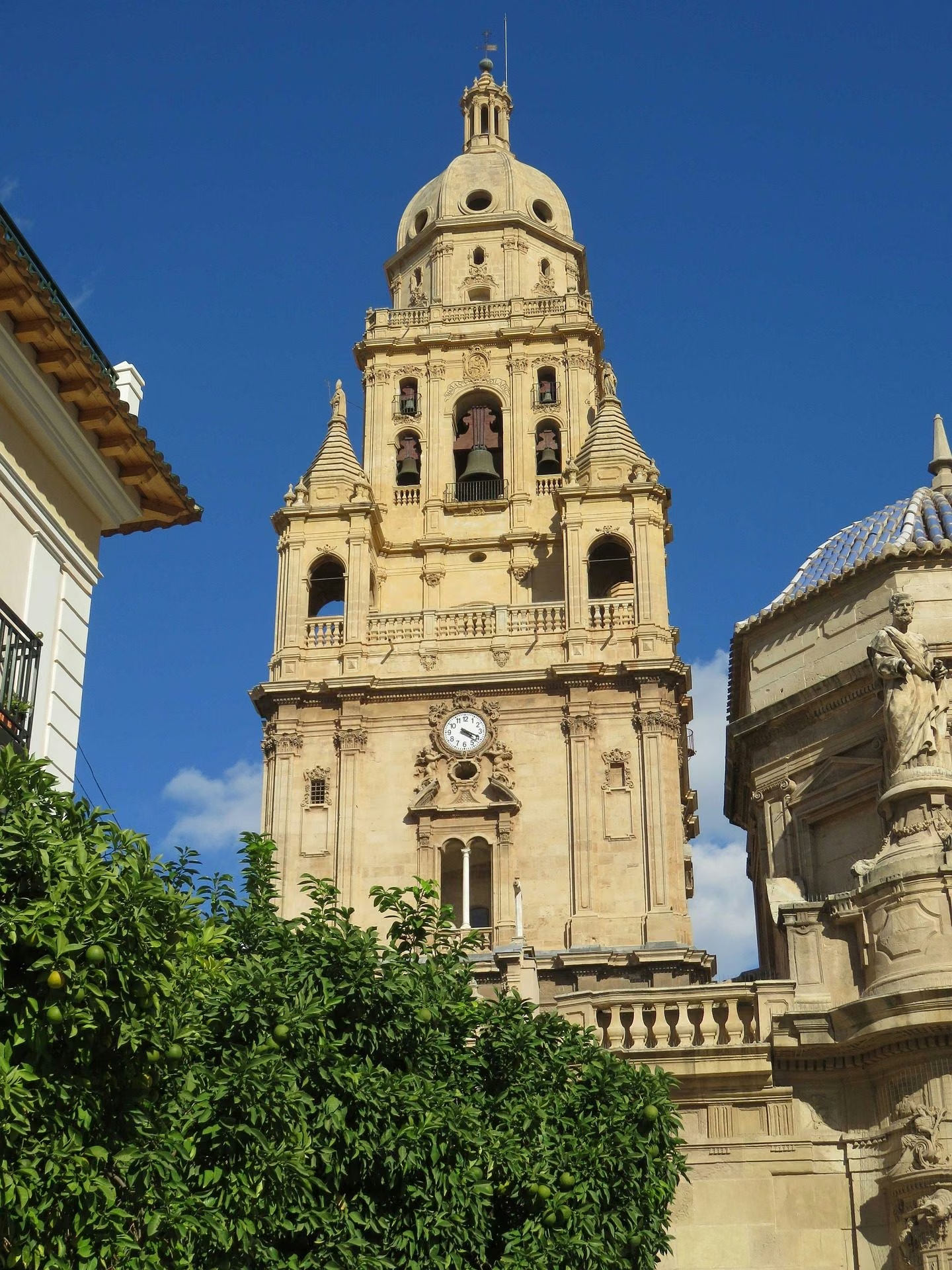
- What you should not missThe Casino, the Cathedral and its tower, Verónicas, Plaza de las Flores, El Carmen and the Malecón, with the reason and the right hour for each.
- Where to eat, my own selectionSixteen places where people from here actually eat, grouped by moment of the day, each with a note.
- A full day, hour by hourFrom nine in the morning to ten at night, on foot, plus sunset from the Fuensanta sanctuary.

Speak directly with John Lomax
One person from start to finish. No switchboards, no sales teams: I answer you myself, in English or Spanish, usually within two hours during working hours.